

Her Saree, Her drape
I’ve always loved wearing sarees. Not just for the beauty of the weave or the tradition it carries, but because of how deeply personal it feels every time I drape one. For me, the saree has never been just an outfit. It’s been a quiet assertion of identity, a canvas for play, and a form of expression that’s constantly evolving with me.
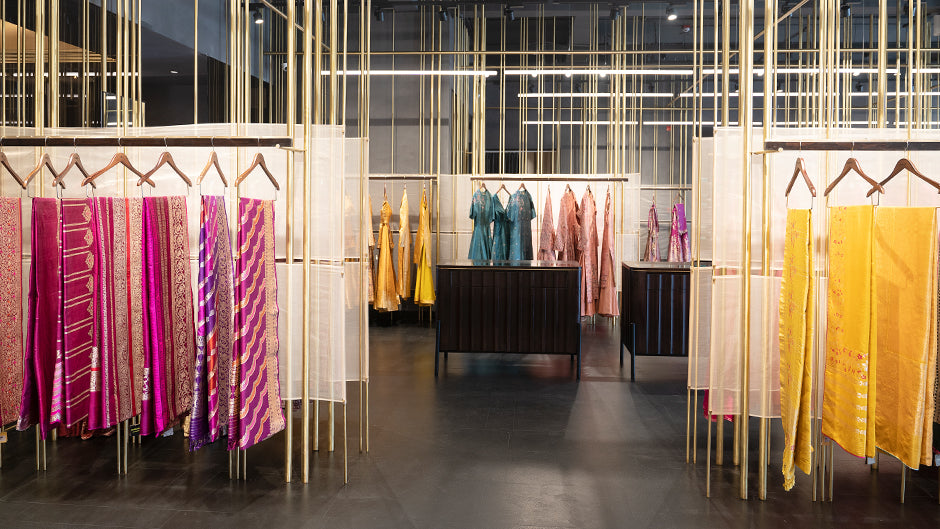
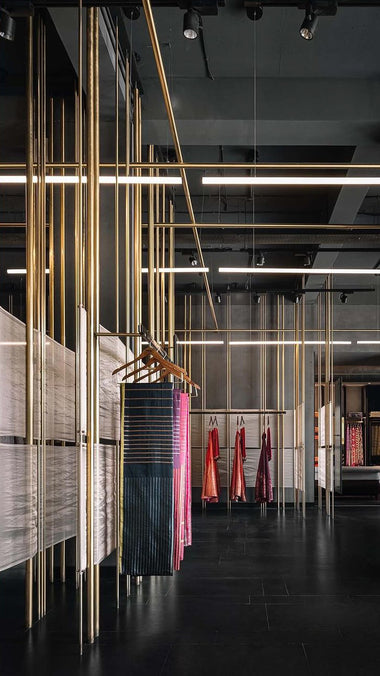
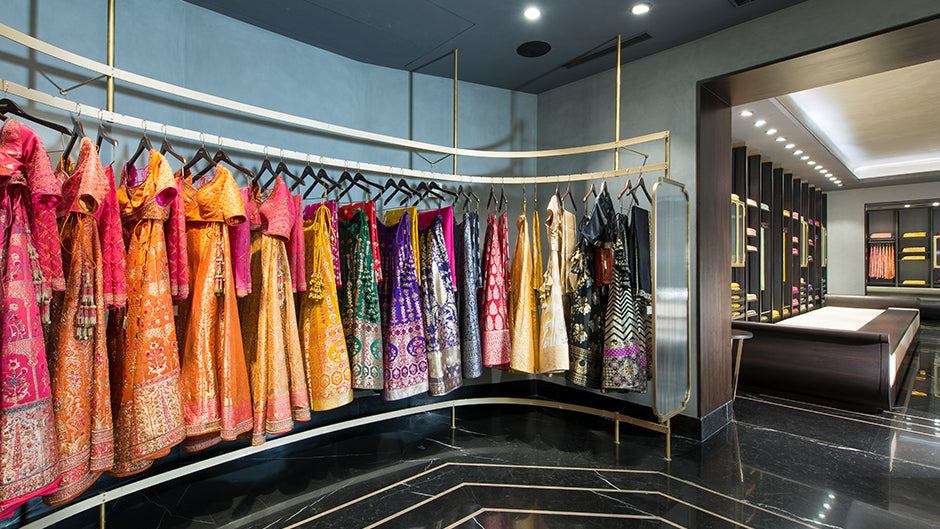
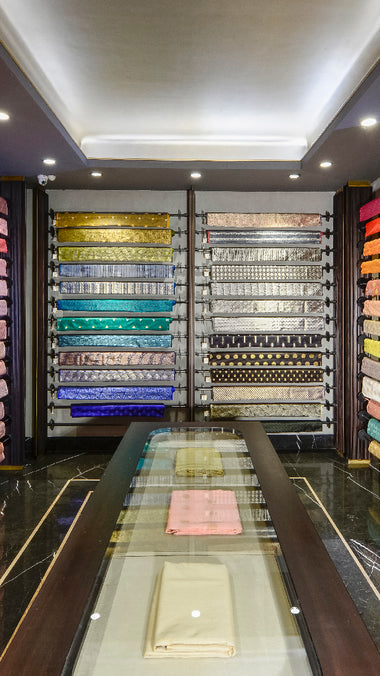
Growing up around textiles, I’ve spent years watching sarees come to life, from the looms of Banaras to the lives of the women who wore them with pride. I’ve never really designed a saree myself until now, but I’ve always been immersed in the process. From accompanying my father to the bustling lanes of Banaras, to seeing countless women walk into Ekaya and walk out transformed in a drape that made them feel seen, beautiful, and powerful — I’ve had a front-row seat to the quiet revolution a saree can create.
“That was my Sunday—me, my dad, and new sarees coming to life. Visiting weavers’ homes wasn’t a special occasion, it was routine. And I think it became part of my wiring without me even realising it.”

Yet, I’ve also felt a disconnect. As much as I love sarees, I’ve often struggled with the idea that they must only belong in traditional settings, worn the ‘right’ way, pinned up in a certain style, saved for the ‘right’ occasion. But India is so diverse, so layered, and every region has its own take on the saree. If those traditions can coexist, why can’t newer ones emerge? This collection is my take on that idea. It’s how I wear my saree. It’s how I imagine the future of the saree.
“I’ve worn sarees to movie halls, beer bars, even to my graduation at Harvard. I never wore them to stand out, but every time I did, I felt like the most stylish, most confident version of myself.”

With this edit, I want to bring the saree into spaces that feel more contemporary, more personal, where it’s not restricted to weddings or pujas, but worn at brunches, boardrooms, gallery openings, and coffee dates. Styled with fun accessories, draped playfully, and reimagined with fresh energy. I want to take everything I’ve grown up with, the legacy, the craftsmanship, the stories woven into Banarasi silk, and make it feel alive in the now.
“Every time I drape a saree, I let it talk to me. I don’t follow any rules, six pleats, left shoulder, right shoulder—who cares? It’s just a piece of fabric. A powerful one. And that’s the beauty of it.”

With this edit, I want to bring the saree into spaces that feel more contemporary, more personal, where it’s not restricted to weddings or pujas, but worn at brunches, boardrooms, gallery openings, and coffee dates. Styled with fun accessories, draped playfully, and reimagined with fresh energy. I want to take everything I’ve grown up with, the legacy, the craftsmanship, the stories woven into Banarasi silk, and make it feel alive in the now.
“I didn’t create this collection to prove a point. I created it because I genuinely believe in the saree. It’s how I play. It’s how I express myself. And I think once people wear it like second skin, they’ll never want to take it off”
This is how I wear my saree. And maybe, this is where the future of the saree begins, with women writing their own drapes.
- Palak Shah -